
LinkedIn recently put six words around a problem sales teams have been wrestling with for years:
“Win the company, not the click.”
That is a useful place to start a guide about LinkedIn lead generation.
Because LinkedIn gives you a lot to count.
Connections. Profile views. Search results. Likes. Comments. Message replies. Followers. Impressions. InMails.
A Head of Sales can look at all of that activity and still ask the only question that really matters:
“Where are the conversations with companies we actually want to win?”
That is where LinkedIn lead generation gets interesting.
The opportunity is not simply to publish more content, collect reactions or send more connection requests. It is to build a repeatable path from the right market, to the right company, to the right person, to a reason for speaking now.
Then LinkedIn becomes more than a database with a feed attached.
It becomes the starting point for an outbound sales conversation.
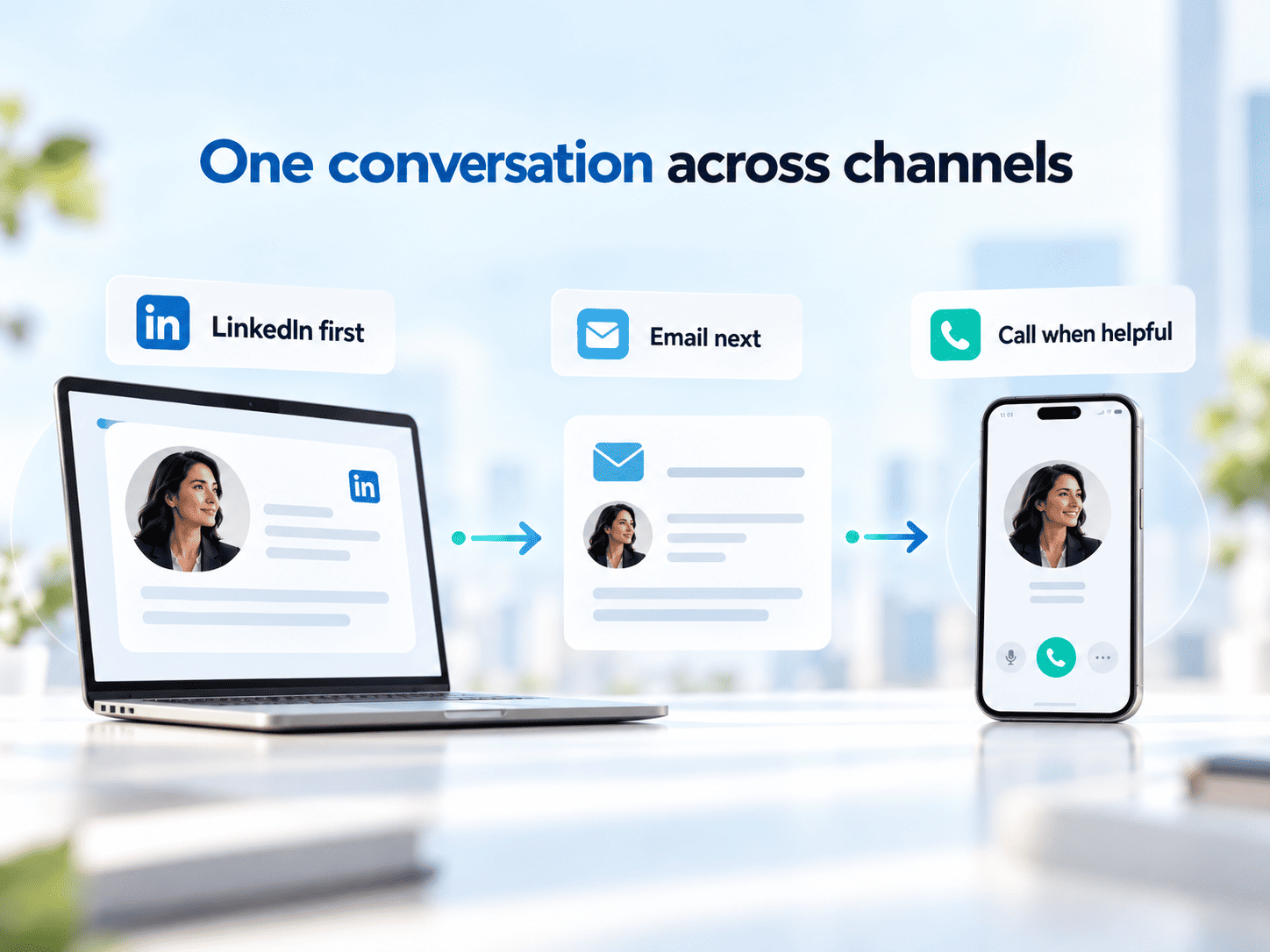
“LinkedIn-first does not mean LinkedIn-only. It means starting with the professional context around the buyer, then using the right channel for what comes next.
”
This matters even more in 2026 because buyers are forming opinions before many sellers know an opportunity exists. LinkedIn and Edelman research referenced by LinkedIn found that 95% of surveyed hidden buyers said strong thought leadership made them more open to outreach.
That does not mean every person who reads a post wants a demo.
It means familiarity, relevance and credibility can exist before the first sales message arrives.
The job of modern LinkedIn prospecting is to make sure sales does not waste that advantage.
1. What LinkedIn lead generation actually means in 2026#
Type “how to generate leads on LinkedIn” into a search engine and the advice quickly becomes tactical.
Optimise your headline. Post more. Comment every day. Use Sales Navigator. Send connection requests. Run Lead Gen Forms. Send InMails. Build your network.
All potentially useful.
But imagine your sales team followed every one of those instructions perfectly.
You could finish the month with thousands of impressions, hundreds of connections and an inbox full of polite conversations while producing almost nothing your CRO would call pipeline.
That happens because activity and lead generation are being treated as the same thing.
They are not.
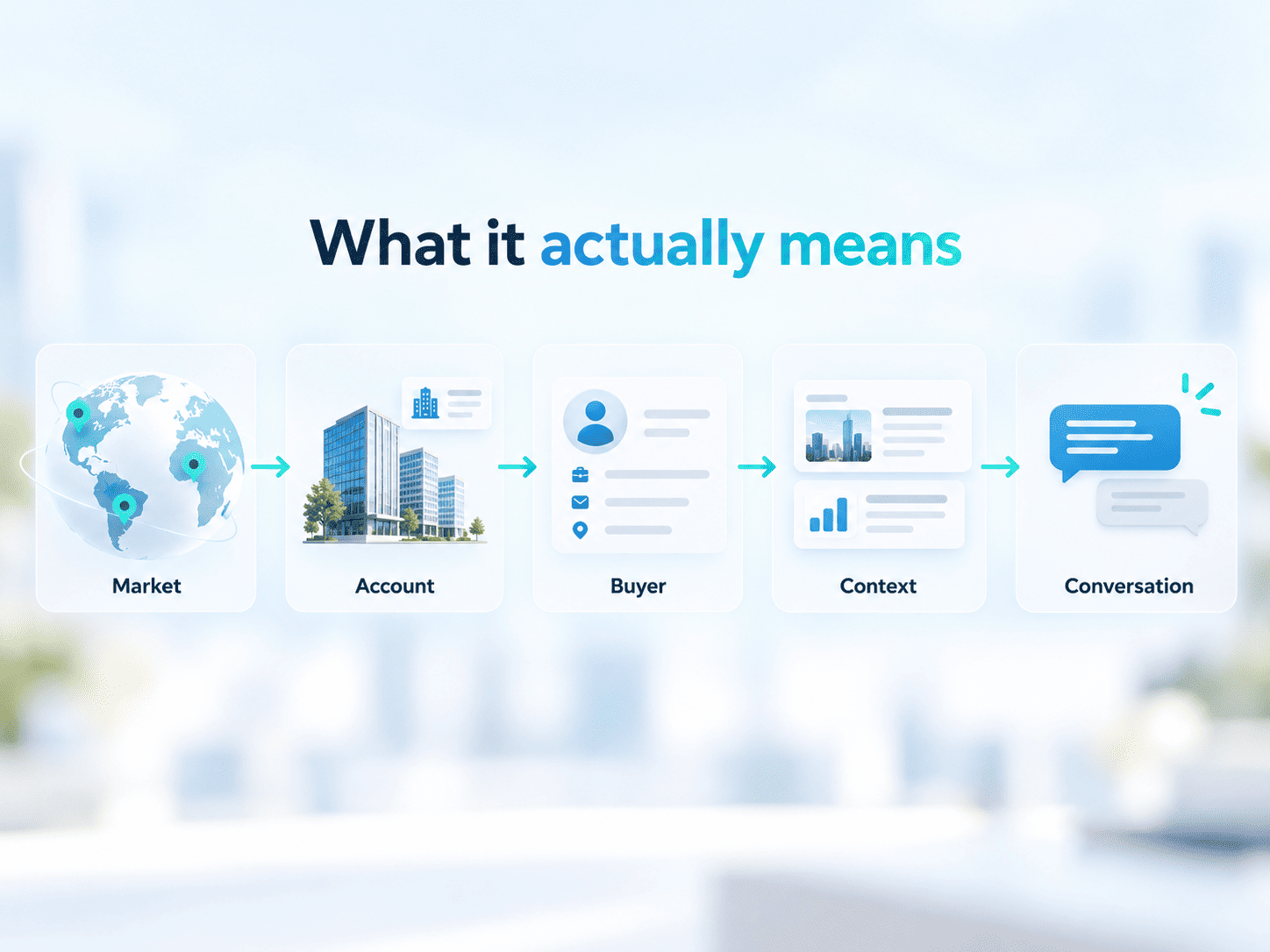
For a B2B sales team, LinkedIn lead generation is the process of identifying relevant companies, finding the right people inside them, understanding enough context to approach them intelligently, beginning an appropriate conversation and measuring whether that conversation progresses commercially.
The journey is closer to this:
Market → Account → Buyer → Context → Conversation → Opportunity
LinkedIn plays an important role across that journey, but the platform itself is not the strategy.
A new connection is not automatically a lead.
A person who reacted to a post is not automatically a lead.
A Sales Navigator search returning 5,000 people definitely does not mean you have 5,000 leads.
The useful question is much harder:
Would your sales team genuinely want a conversation with this person at this company?
That is where lead generation begins.
2. The first LinkedIn mistake happens before anybody sends a message#
Monday morning.
Your SDR opens Sales Navigator.
They enter:
United Kingdom. SaaS. 11–200 employees. Head of Sales. VP Sales. CRO.
Thousands of people appear.
It feels like progress because the screen is full.
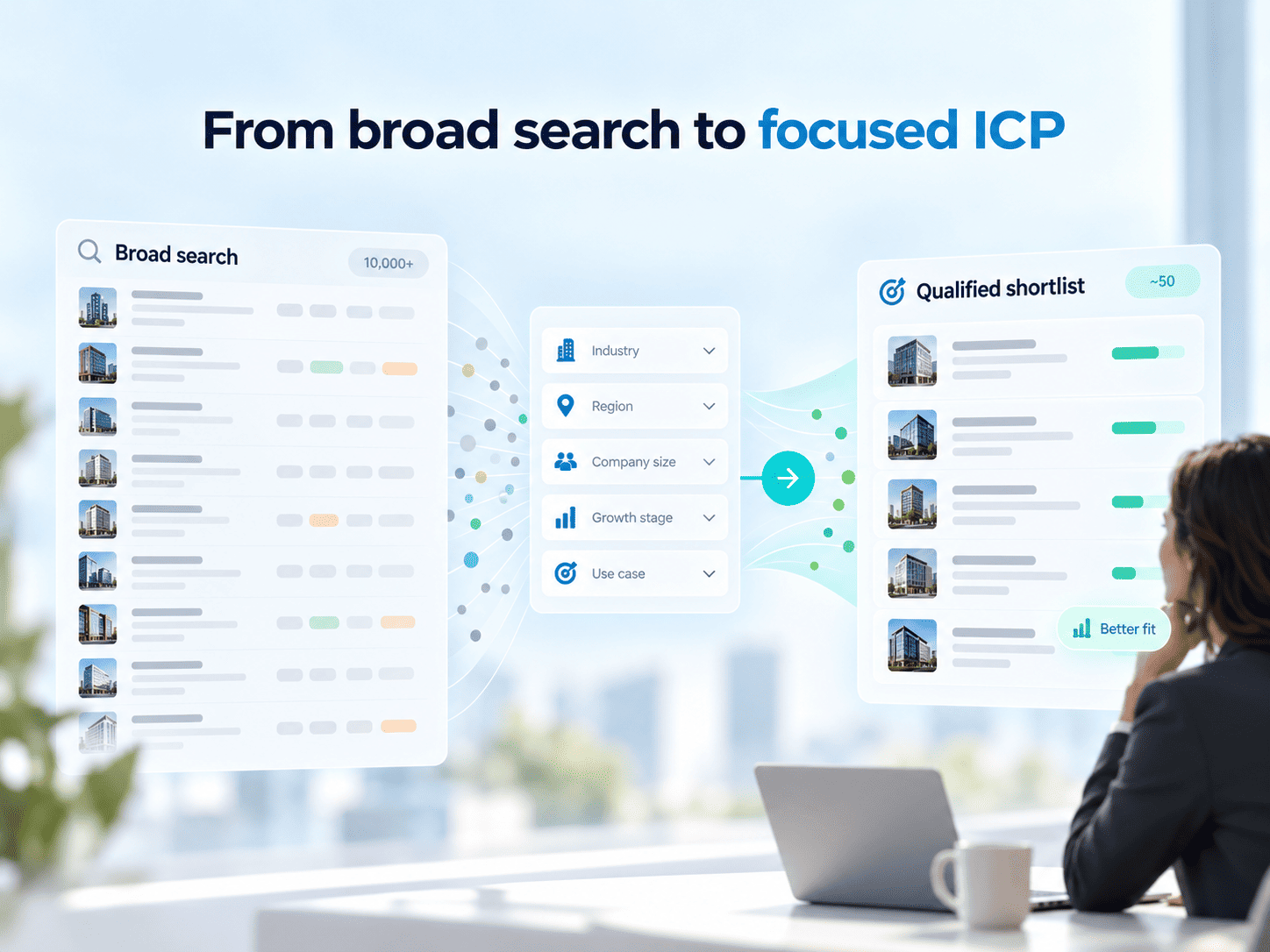
But filters can only tell you that a company resembles the market you described. They cannot tell you whether that business has the problem you solve, whether the person really owns it or whether this is a sensible moment to start a conversation.
That is why strong B2B LinkedIn lead generation starts outside the search box.
You need an ICP that goes beyond demographics.
For example, a B2B SaaS company may look attractive because it has 70 employees and a VP Sales. But the more useful questions might be whether it runs founder-led or SDR-led outbound, whether the commercial team is changing, whether prospect research is still manual, whether the business is entering new markets and whether the sales leader actually owns the outbound process.
Now the search has commercial meaning.
The difference sounds small:
“Find Heads of Sales at SaaS companies.”
versus:
“Find sales leaders at growing B2B SaaS companies where outbound is important enough that inconsistent prospect research and messaging could become a real operating problem.”
The first creates a list.
The second starts creating a market.
Try it with OREE: turn one ICP into a real LinkedIn-first prospecting workflow rather than another broad contact search. Start your 30-day free trial — up to 500 leads included.
3. Find the company before you fall in love with the contact#
LinkedIn makes people unusually easy to notice.
A strong profile. An impressive title. A thoughtful post. A mutual connection. A prospect who looks exactly like the person you imagined when the campaign was created.
It is tempting to start writing immediately.
Then you research the company and discover it makes no sense.
Wrong business model. Wrong sales motion. Too small. Too large. Already a customer. Direct competitor. No meaningful connection to the problem.
The profile was right.
The account was wrong.
This is why company-first prospecting matters.
Account first#
Before deciding who to message, ask whether the organisation deserves sales attention.
Does it fit the target market? Does the business model make sense? Is there a plausible problem OREE can help solve? Are there exclusions that should remove the company before an SDR spends time researching it?
Person second#
Once the account earns attention, find the person closest to the problem.
That might be a Head of Sales, VP Sales, CRO, founder or SDR leader. Growth, Demand Generation or RevOps may also matter where they genuinely own outbound.
Titles alone are not enough.
A VP Sales in one company may own the entire prospecting operation. At another, that work sits with RevOps. At a small SaaS company, the CEO may still be effectively acting as Head of Sales.
Good LinkedIn prospecting therefore asks two separate questions:
Is this a company we want?
and:
Is this the person who should care?
Only when both answers hold up should the message become interesting.
4. “I found them” is not the same as “I know why I should contact them”#
This is where most LinkedIn automation gets impatient.
Prospect found.
Profile found.
Message generated.
Next.
But there is an uncomfortable gap between finding someone and having something worth saying to them.
That gap is research.
Not research for the sake of proving that the SDR opened six browser tabs. Research that changes the commercial decision.
A useful prospect brief should answer a small number of questions well:
| Question | What sales needs to understand |
|---|---|
| Why this company? | What makes the account commercially relevant? |
| Why this person? | What connects them to the problem? |
| What has changed? | Is there context that affects priority or timing? |
| What do we know? | Which facts are actually supported? |
| What are we assuming? | Where does inference begin? |
| Why might they care? | How does the context connect to the proposition? |
| What should we say? | What conversation is justified by the evidence? |
Consider the difference.
Prospect data:
VP Sales. 82 employees. B2B SaaS. London.
Useful for filtering.
Now add context:
The company is adding SDRs while expanding into another market. The VP Sales appears to own the commercial team. That does not prove their current outbound process is struggling, but it creates a credible reason to explore how research and messaging are being kept consistent as the motion changes.
Now the salesperson has an angle.
The difference is not more data.
It is more meaning.
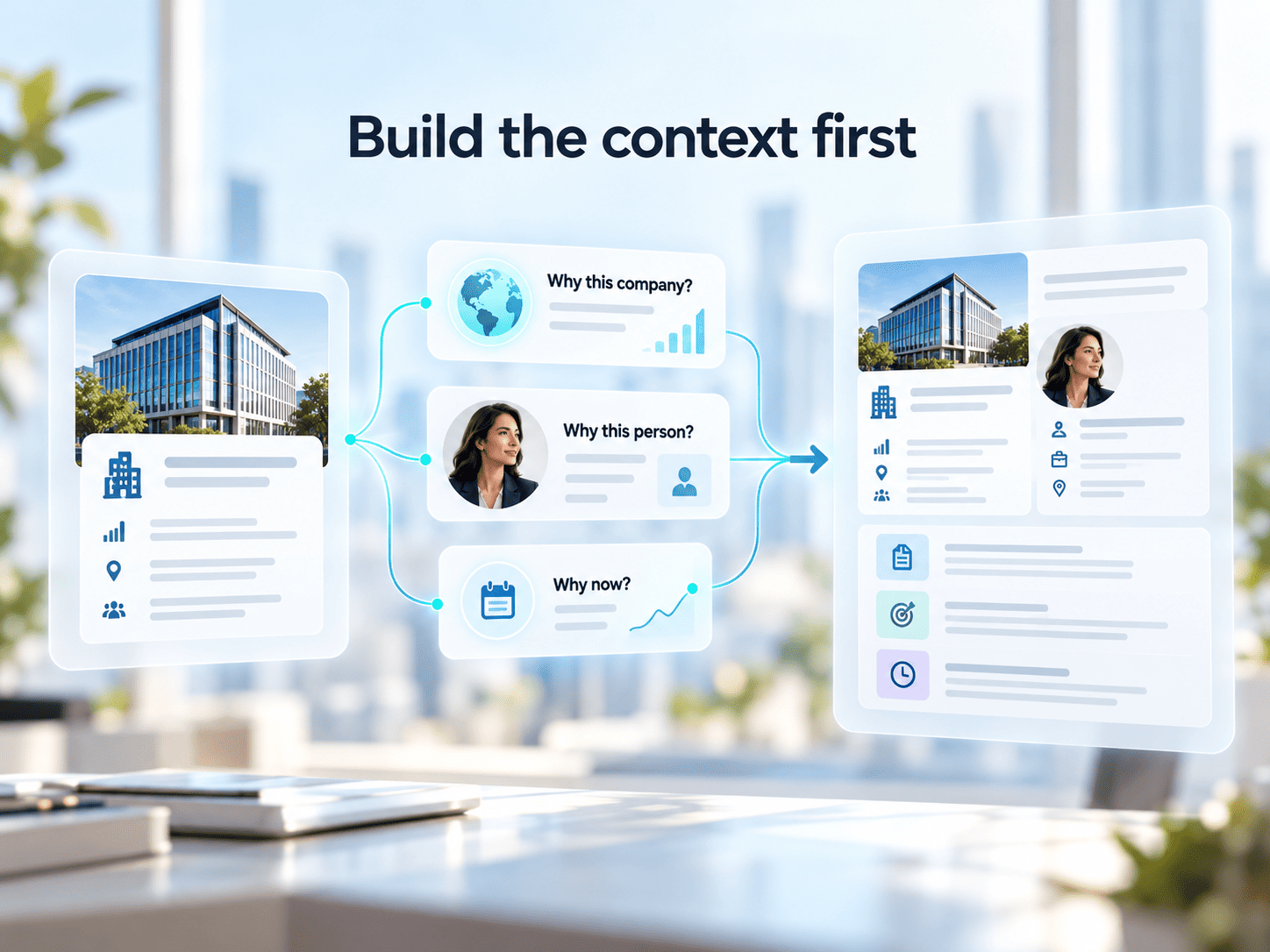
“Why this prospect? Why now?
”
That should be answered before somebody starts worrying about the cleverest opening line.
Try it with OREE: research a real LinkedIn prospect before writing the message and see whether the evidence changes what your SDR would say. Start your 30-day free trial — up to 500 leads included.
5. LinkedIn-first does not mean LinkedIn-only#
This distinction is important because LinkedIn-first outreach can easily be misunderstood.
It does not mean forcing every prospect through the same four LinkedIn messages.
It does not mean replacing email.
It does not mean refusing to make a phone call because the lead originated on LinkedIn.
It means LinkedIn becomes a strong starting point because the professional context is already there.
The prospect has a role, company, work history, network and professional identity surrounding the conversation. The salesperson is also visible. A buyer receiving the message can inspect the sender in seconds.
That makes LinkedIn particularly useful for recognition and context.
Email can do a different job.
It gives more room to explain the commercial idea. It can carry detail that would feel heavy inside a LinkedIn message. Calls can become useful when there is enough context to have a real conversation rather than perform a cold script at somebody.
The mistake is treating each channel as a separate campaign.
Imagine this sequence:
LinkedIn:
Alex, the new-market expansion caught my eye. Thought it made sense to connect.
Two days later:
Email:
Hi Alex, I came across your profile and wanted to introduce myself...
The email has forgotten the LinkedIn message exists.
From the SDR's dashboard these are two coordinated touches.
From Alex's side, the company appears to have suffered a small memory problem.
A better principle is:
One prospect. One commercial reason. Different channels when they add something.
6. Your connection request is not a compressed pitch deck#
Somewhere along the way, sales teams started asking a connection note to do far too much.
You have fewer than a handful of lines, so naturally we try to fit in the company description, pain point, value proposition, social proof and CTA.
The result often sounds like this:
Hi Alex, noticed you're Head of Sales at Acme. We help B2B SaaS businesses leverage AI to streamline prospecting, improve efficiency and generate more pipeline. Would love to connect and explore synergies.
Everything is technically understandable.
Nothing sounds like a person wanted to say it.
A connection request has a simpler job: make connecting feel reasonable.
Suppose the prospect is a Head of Sales at a B2B SaaS company entering a new market while adding SDRs.
You might write:
Alex, the US expansion alongside the SDR hiring caught my eye. Relevant to some work we're doing around outbound research, so thought I'd connect.
Or the right recommendation may be to send no note and let the profile do the work.
The follow-up can carry more substance:
Thanks for connecting, Alex. The part that caught my attention was the research side rather than sending volume. When the market changes while the SDR team grows, keeping prospect context and messaging consistent can become surprisingly manual. Curious how you're handling that today.
The first interaction created recognition.
The second created relevance.
Neither tried to win the deal inside the connection request.
That is a healthier way to think about LinkedIn outreach.
Try it with OREE: prepare connection and follow-up messaging from the same research context, then review it before it represents you. Start your 30-day free trial — up to 500 leads included.
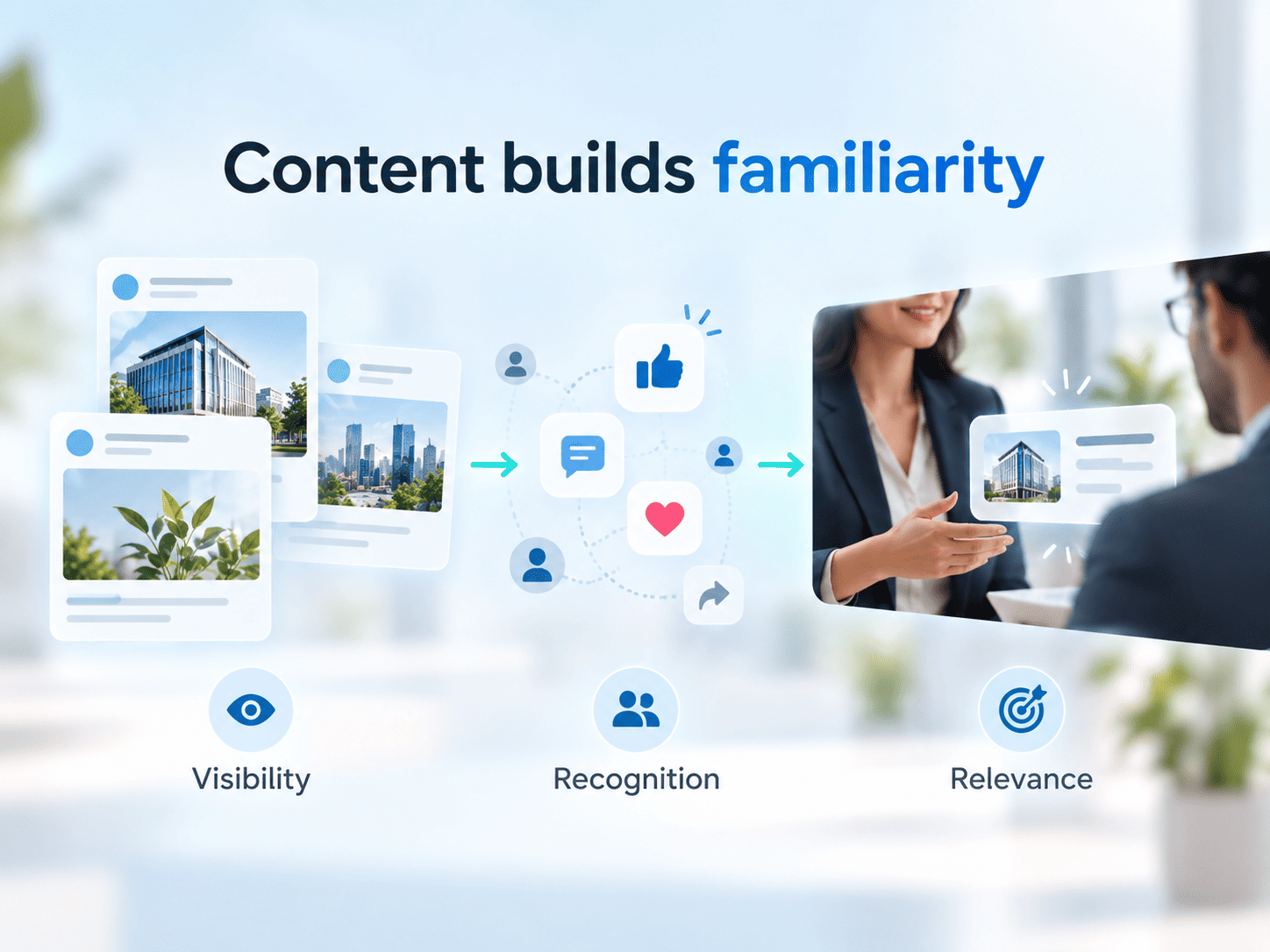
7. Content can warm the room. It does not turn every viewer into a lead#
LinkedIn content matters because buyers do not begin thinking about you when your SDR presses send.
They may already have seen a founder's post.
A colleague may have shared an article.
They may recognise the company name.
They may have read something useful six weeks earlier and quietly moved on with their day.
That familiarity matters.
LinkedIn's 2026 discussion of people-led thought leadership cites LinkedIn and Edelman research in which 95% of surveyed hidden buyers said strong thought leadership made them more open to outreach.
That is significant.
It is also easy to misuse.
The wrong lesson is:
“Anyone engaging with our content is warm. Send them a sales message.”
Someone liking a post does not mean they have a project.
Someone reading an article does not mean they are evaluating software.
Someone following the founder does not mean they want to enter a sequence.
The better lesson is that good content can make future sales outreach arrive in a different environment.
The buyer may recognise you.
They may already understand your point of view.
They may be more willing to inspect your profile or hear the commercial idea.
But the outreach still needs to stand on its own.
The stronger operating principle is simple:
content can create familiarity; prospect intelligence decides who deserves sales attention.
8. AI should prepare the LinkedIn message. A person should still recognise themselves in it.#
AI has made one part of LinkedIn lead generation almost absurdly easy.
Writing words.
Give a model a job title, company, profile and recent event, and it can produce a perfectly respectable message before an SDR has finished opening the account.
That is useful.
It is also not the hard part.
The difficult questions come before the prose:
Is this really the right prospect?
Does the information matter?
Is the inference fair?
Would mentioning this context help or make the message feel invasive?
Is LinkedIn even the right first channel?
A machine can prepare an answer.
A salesperson still needs to own the judgement.
Imagine a company is advertising three SDR roles.
AI can quite reasonably produce:
“I saw you're growing the SDR team, so maintaining consistency must be becoming difficult.”
It sounds plausible.
It is also an assumption disguised as knowledge.
A better human-reviewed version might become:
“Saw the SDR hiring. Curious whether adding more people changes how you're thinking about research and messaging consistency across the team.”
The evidence is the same.
The level of certainty is different.
That is why human approval matters.
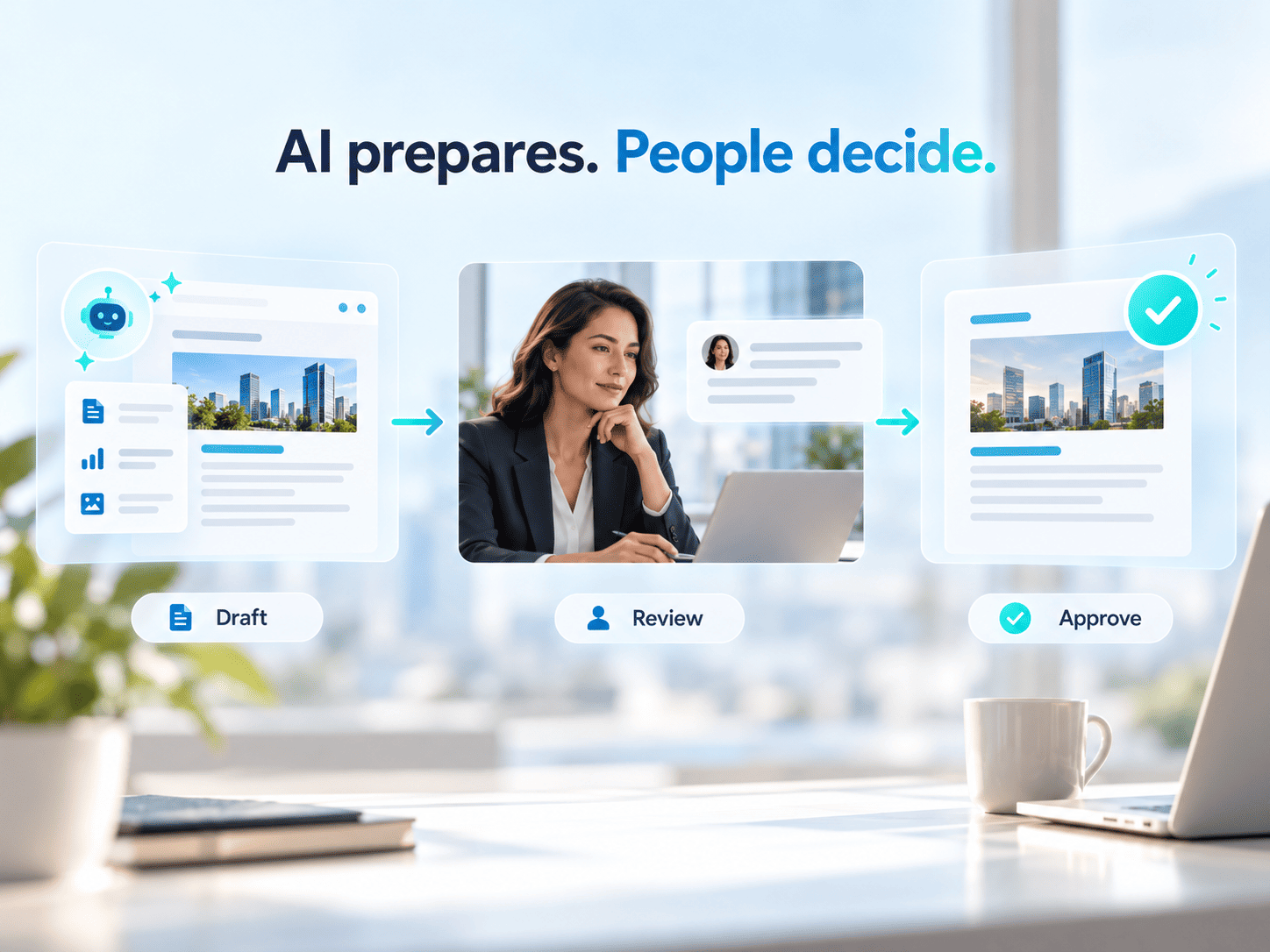
“AI prepares. People decide and sell.
”
Try it with OREE: let AI handle repetitive preparation while your salesperson keeps control of what represents the business. Start your 30-day free trial — up to 500 leads included.
9. When LinkedIn stops being the best channel, move — do not restart#
A good LinkedIn-first process should eventually survive outside LinkedIn.
Sometimes the buyer connects but does not answer there.
Sometimes the idea requires more detail.
Sometimes email is simply easier.
Sometimes the prospect's context is strong enough that a properly prepared call makes sense.
The key is carrying the memory across.
Suppose your LinkedIn message has already explored how a growing SDR team is handling prospect research.
The email should not begin:
Hi Sarah, I came across your profile and wanted to introduce myself...
You already introduced yourself.
A more natural continuation might be:
Subject: the SDR research point
Sarah,
Thought email was easier for the longer version. The reason the hiring caught my attention is that research tends to become inconsistent before teams realise the preparation itself has become a process.
OREE is built around that gap — preparing the prospect and company context, then helping turn it into LinkedIn and email outreach for a person to review.
If that's relevant to how you're scaling the team, happy to show you the workflow.
The channel moved.
The commercial thread survived.
Calls should work the same way.
The person picking up the phone should not have to explain their company from scratch after three previous touches. The salesperson should have the relevant research, outreach history and notes available before the conversation starts.
10. If your LinkedIn report ends at connections, sales has learned almost nothing#
There is a meeting every sales leader eventually sits through.
Someone says:
“LinkedIn performed really well this month. We generated 400 new connections.”
There is usually a small pause.
Then somebody asks:
“How many became conversations?”
The room becomes less enthusiastic.
This is the measurement problem with LinkedIn lead generation.
Connections are useful diagnostic information.
So are acceptance rates, messages, profile views and responses.
But they sit too early in the process to tell you whether the activity created commercial value.
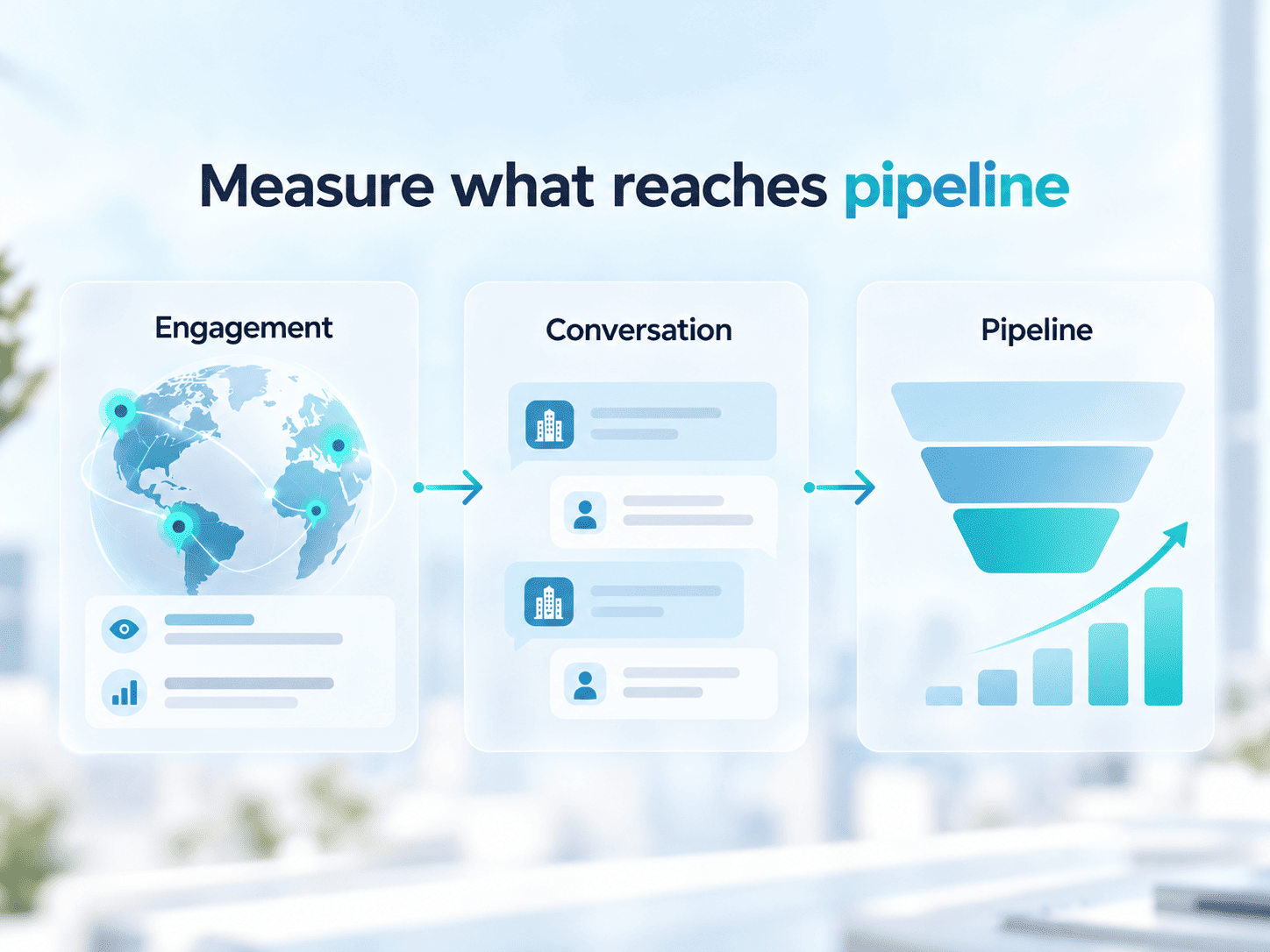
A useful sales measurement hierarchy might look like this:
| Stage | What to measure |
|---|---|
| Target quality | Are the accounts and buyers genuinely ICP-aligned? |
| Research quality | Can the SDR explain why the prospect deserves contact? |
| Engagement | Are relevant buyers connecting and replying? |
| Conversation | Are replies becoming meaningful sales discussions? |
| Progression | Are appropriate conversations advancing to trials, demos or opportunities? |
| Commercial impact | Is the activity contributing to pipeline and revenue under an agreed attribution method? |
The word contributing matters.
A deal may involve a LinkedIn connection, founder content, an email, a call, a referral and several other interactions before a buyer signs.
LinkedIn does not need to claim all of the credit to be commercially valuable.
It needs to preserve enough context for the business to understand what it contributed.
Try it with OREE: move beyond connection counts and build LinkedIn into a workflow that can be evaluated against real sales progression. Start your 30-day free trial — up to 500 leads included.
11. A practical LinkedIn-first workflow for B2B outbound#
The strategy becomes much simpler once you stop thinking in isolated tactics.
You do not need a 37-step LinkedIn playbook.
You need a repeatable commercial process.
Step 1: Define the market#
Choose a clear ICP, buyer and problem. Decide who should not enter the campaign as carefully as you decide who should.
Step 2: Discover relevant companies#
Use LinkedIn, Sales Navigator and other approved discovery sources to find accounts that match the market.
Step 3: Find the right people#
Identify the individuals most likely to own, experience or influence the problem.
Step 4: Research before messaging#
Build enough company and person context to understand why the account deserves attention and whether anything changes the timing.
Step 5: Decide how LinkedIn should be used#
For one prospect, LinkedIn may be the natural first interaction. For another, email may make more sense. LinkedIn-first should guide the workflow without becoming dogma.
Step 6: Prepare the connection and follow-up#
Keep the opening light. Let subsequent messages progress the idea rather than repeat the pitch.
Step 7: Review the judgement#
Check the evidence, inference, tone and commercial relevance before anything represents the business.
Step 8: Move channels when useful#
Carry the same context into email, voice or calls rather than restarting the conversation.
Step 9: Hand replies to sales#
Once somebody engages, stop treating them like a sequencing problem. A salesperson should own the conversation.
Step 10: Measure what happened afterwards#
Track whether the original targeting and outreach created qualified conversations, trials, opportunities and ultimately commercial progress.
The entire process can be compressed into five questions:
Who matters? Why them? Why now? What should we say? What happened next?
If your LinkedIn lead-generation process cannot answer those questions, adding another automation tool probably will not fix it.
12. Where OREE fits into LinkedIn lead generation#
OREE is an AI-assisted outbound sales platform built around a LinkedIn-first outreach workflow.
That distinction matters.
The goal is not to bolt LinkedIn onto an email sequencer and call the result multichannel. OREE is designed around the work that has to happen before and around the LinkedIn conversation: defining the target, discovering relevant prospects, researching the person and company, preparing contextual outreach, reviewing it and carrying the resulting context into the rest of the sales process.
LinkedIn lead discovery is available through approved LinkedIn and Sales Navigator workflows where connected. Prospect and company research is live. LinkedIn connection messages and follow-up messages are live. LinkedIn sending is available through the approved connected workflow, subject to account health and responsible-use requirements.
Email can sit alongside that LinkedIn workflow rather than existing as a separate campaign.
OREE also keeps the salesperson in control.
The objective is not to create an autonomous system that silently continues sales conversations without judgement. AI prepares the work. People review what represents the business and take ownership when the conversation becomes genuinely commercial.
That is the operating model:
LinkedIn-first. Context-led. Human-controlled.
You begin with the professional world around the buyer.
You understand why the account belongs in the campaign.
You build the context before the message.
You use LinkedIn to begin the conversation where appropriate.
You bring email, voice or calls into the process when they improve the conversation.
Then the salesperson takes over when selling actually begins.
“Better signals. Better conversations.
”
Frequently asked questions about LinkedIn lead generation#
What is LinkedIn lead generation?#
LinkedIn lead generation is the process of identifying relevant companies and buyers on LinkedIn, understanding their commercial context, beginning appropriate conversations and progressing qualified interest towards a sales outcome.
For B2B outbound teams, it is more useful to think beyond connections and message volume. The objective is to create conversations with people your sales team genuinely wants to speak with.
How do you generate B2B leads on LinkedIn?#
Start by defining the target market and buyer, then identify companies that fit before choosing the individual contacts. Research the account and prospect, establish whether there is a credible reason to engage and prepare outreach that reflects the context.
LinkedIn can be the first channel without needing to be the only channel.
What is LinkedIn-first outreach?#
LinkedIn-first outreach uses LinkedIn as a primary starting point for prospect discovery, professional context and early interaction.
It does not mean every prospect must remain on LinkedIn. Email, calls, voice or other appropriate channels can follow when they improve the conversation.
Is LinkedIn good for B2B lead generation?#
LinkedIn is particularly useful in B2B because professional roles, companies, career histories and networks sit close to the messaging environment.
That makes it easier to understand who somebody is professionally before approaching them. Results still depend on ICP quality, research, proposition, outreach quality, timing and sales execution.
Should I message everyone who engages with my LinkedIn content?#
No.
Content engagement can create familiarity or useful context, but it does not automatically establish buying intent. The person should still fit your market and there should be a legitimate commercial reason for outreach.
Should LinkedIn or email come first?#
There is no universal answer.
LinkedIn can work particularly well when professional identity and recognition improve the opening interaction. Email may be better when the proposition needs more explanation.
The strongest approach is to choose the channel based on the prospect and conversation rather than forcing every account into an identical sequence.
Can AI automate LinkedIn lead generation?#
AI can support prospect research, prioritisation and message preparation, but the quality of the outcome still depends on commercial judgement.
A good human-controlled workflow keeps people responsible for validating the context, approving what represents the company and handling real sales conversations.
What should I measure in LinkedIn lead generation?#
Measure the quality of the target accounts, meaningful replies, qualified conversations, sales progression and commercial outcomes where reliable data and attribution are available.
Connection counts and impressions can help diagnose activity, but they should not become substitutes for pipeline.
What is included in the OREE free trial?#
OREE's current offer is a 30-day free trial with up to 500 leads included, giving teams a practical way to test a real LinkedIn-first outbound campaign rather than evaluating the platform against a handful of artificial prospects.
Start your 30-day free trial and build your first LinkedIn-first campaign with OREE.
The LinkedIn lead is not the person who clicked#
It is tempting to reduce LinkedIn lead generation to whatever is easiest to count.
A connection.
A reaction.
A message.
A profile visit.
But those are moments, not outcomes.
The real opportunity is what happens when LinkedIn gives a salesperson enough professional context to make a better commercial decision.
This is a company we want to win.
This is somebody worth speaking with.
This is why the conversation might matter now.
This is the idea worth bringing to them.
That is a very different standard from sending as many connection requests as the workflow will tolerate.
And it creates a much better role for AI.
Let the technology do the repetitive preparation.
Let it find and structure the context.
Let it help prepare the message.
Then let a salesperson decide whether a real human being should receive it.
That is what LinkedIn-first outbound should become in 2026.
Not another volume play.
A better route from prospect → context → conversation.
Better signals. Better conversations.
Written by
Kingsley Nnamonah
Head of Product
Builds the OREE product. Spent the last decade shipping AI tooling for revenue teams. Writes about the engineering and product decisions behind the co-pilot.


